*A data-driven answer to our vaccine problems. *
Today, we can’t move our vaccines from point A to point B; public transportation is our fix.
Summary:
- Too many COVID vaccines are sitting in freezers
- Public transportation can help us ship vaccines from super-site to super-site (based on intraday supply/demand)
- We can use currently empty trains to save lives and speed up economic recovery
The goal of a vaccination rollout should be to (a) get as many people vaccinated as (b) fast as possible (c) without spending a fortune.
Vaccine efforts have been spotty across the globe (US, China, India, Russia, etc) by those measures. Here is the status of vaccinations in the US:
- 1.3M doses per day (today’s vaccination rate) = 1 year till we reach suitable vaccination levels.
- 3M doses/day (if we double our rate) = 3 months till everyone has their 1st dose, and 6 months till we reach suitable levels for 2nd
- 10M doses/day (6x faster than today) = 3 weeks till everyone has their 1st dose, and 7-8 weeks till we reach suitable levels for 2nd
So what needs to be done to get to 2x or 6x faster vaccination rollout, make vaccines accessible for free at your local CVS, get small businesses open, and begin the journey to a ‘post-COVID’ world?
Let’s walk through it - I have a hypothesis that I believe can make vaccine rollout exponentially cheaper and faster (at least in heavily populated metros) - using public transportation to get vaccines to the right places faster.
Let’s take the Bay Area, California for example (where this pilot experiment should be run in my opinion):
- 8 Million people call the bay area home (2.5% of total US population), with another 30M+ who visit throughout the year
- Public Transportation systems of BART and AC Transit cover movement across the ~200 miles in which the population resides
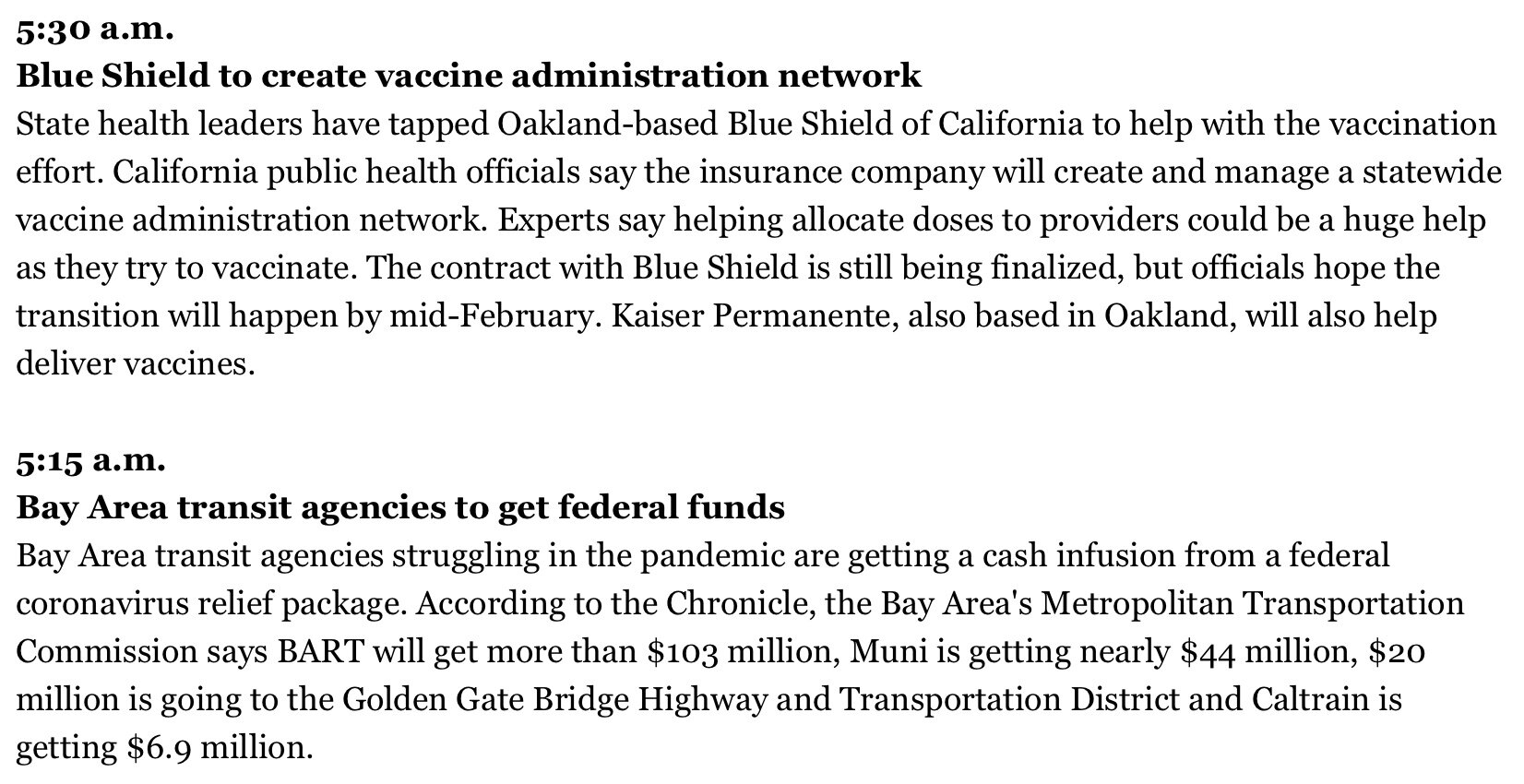
- **$1 Billion Emergency funds are to be distributed **as ridership is down ~90% for some public transportation systems causing financial burden
- **Blue Shield, **a private non-profit health network, was tapped to lead the vaccine distribution in California as rollout lags behind
- **Only 1.4% of the population **have received their 2nd vaccine shot, as **43% of vaccines **granted to CA sit in freezers.
**The problem **- vaccines sit in freezers because either:
- We don’t have the vaccines in the right city (they’re still in storage), or
- We don’t have enough doctors to administer the vaccines once they are in the right city
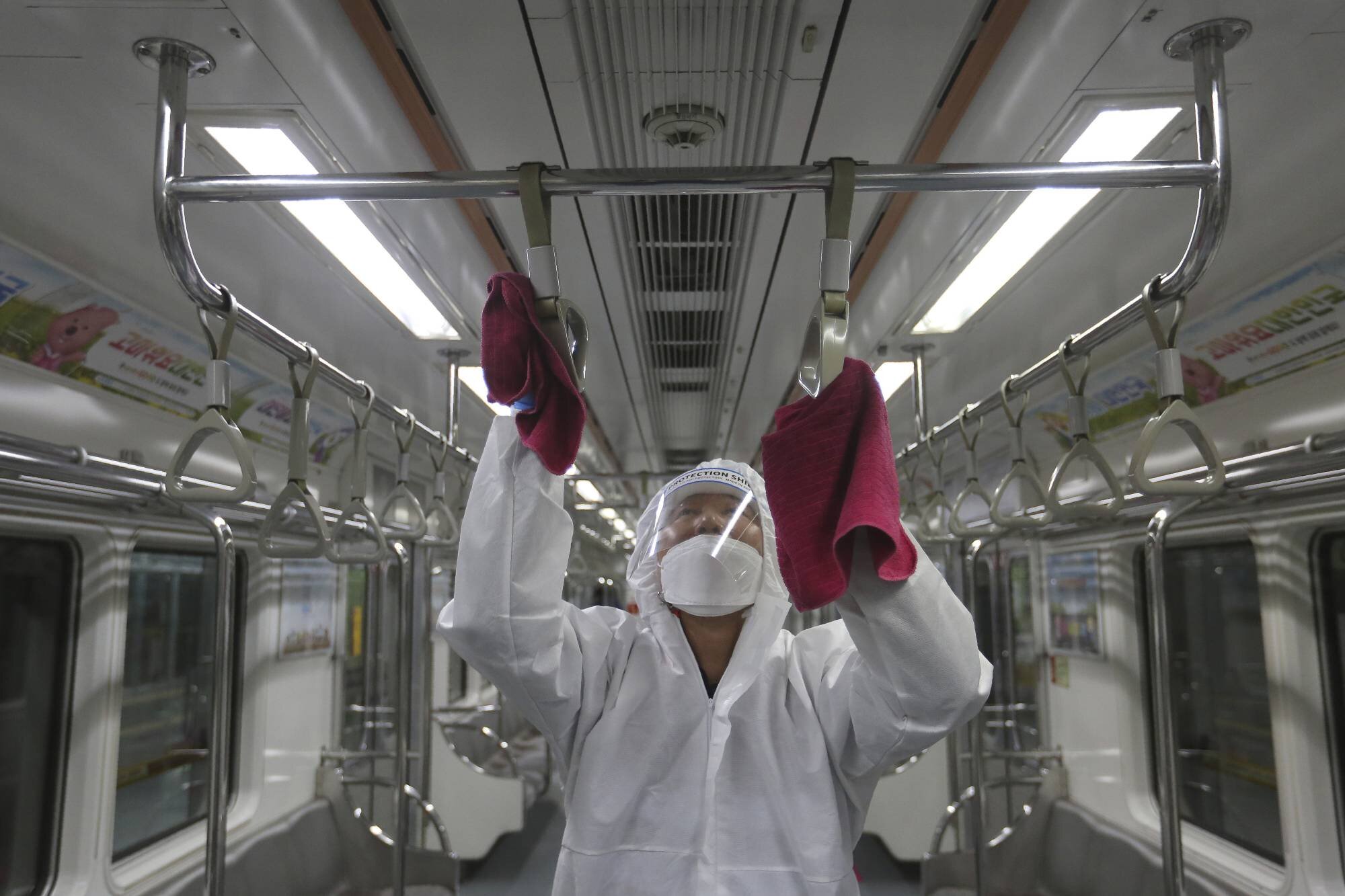
The simple idea - use the existing debt-ridden public transportation systems that are currently totally empty today, to ship vaccines to optimal locations. The trains are empty anyway and vaccines are currently not being delivered as fast as we need currently. Ideally, this means:
- **Bottlenecks like lack of doctors are removed **(ex: Palo Alto has extra vaccines and no free doctors → ship the vaccines to Oakland immediately)
- **Costs are reduced **via public transportation (ex: vaccines sitting at SFO airport can be cheaply moved to anywhere in the Bay)
- You can even safely move people to large vaccination sites “for free” (ex: free train rides to Oakland Coliseum)
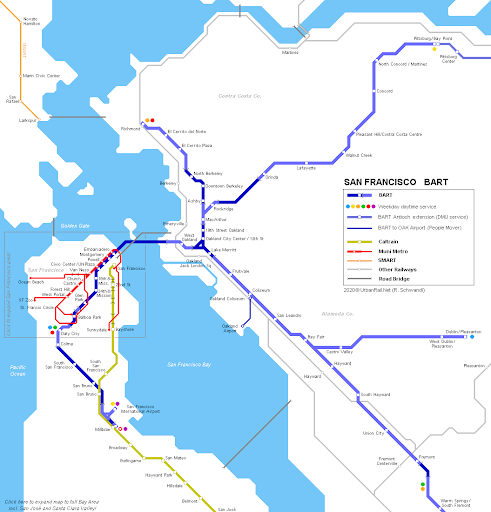
200 miles
8 Million people covered via BART, AC Transit, MUNI
There are a few other coordinations that have to work with this for an effective strategy, however - notifying people, freezer storage, vaccine education, insurance & medicare.
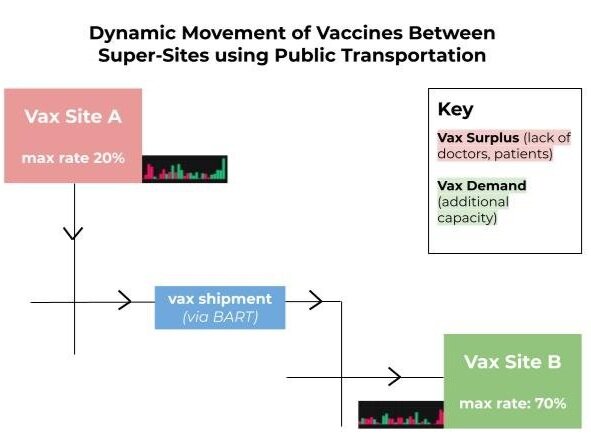
We use public transportation systems (BART, NY Subway, DC Metro, “L”) to quickly and cheaply move vaccines to large-scale vaccination sites like Walmart parking lots, football stadiums, or public parks. If there’s a slowdown in Site A - the previously freezer-occupying vaccines should be on the way to Site B.
In a way, it is like treating vaccination sites like stocks in order to get as many people vaccinated in the shortes amount of time possible - save lives, speed up economic recovery.
We’ve paid the fixed costs of building transportation systems and now is a perfect time to capitalize on that.
It’s evident that allowing for in-person business to be conducted is essential for combatting unemployment and encouraging growth (it’s the Fed’s #1 priority). We can’t let vaccines sit in freezers, especially when an easy alternative sits in front of us.
News from a few days ago:
***Note: ***More to come in v2 on how this could be applicable to other regions (within the US and internationally) + details on the idea + feedback from this iteration